
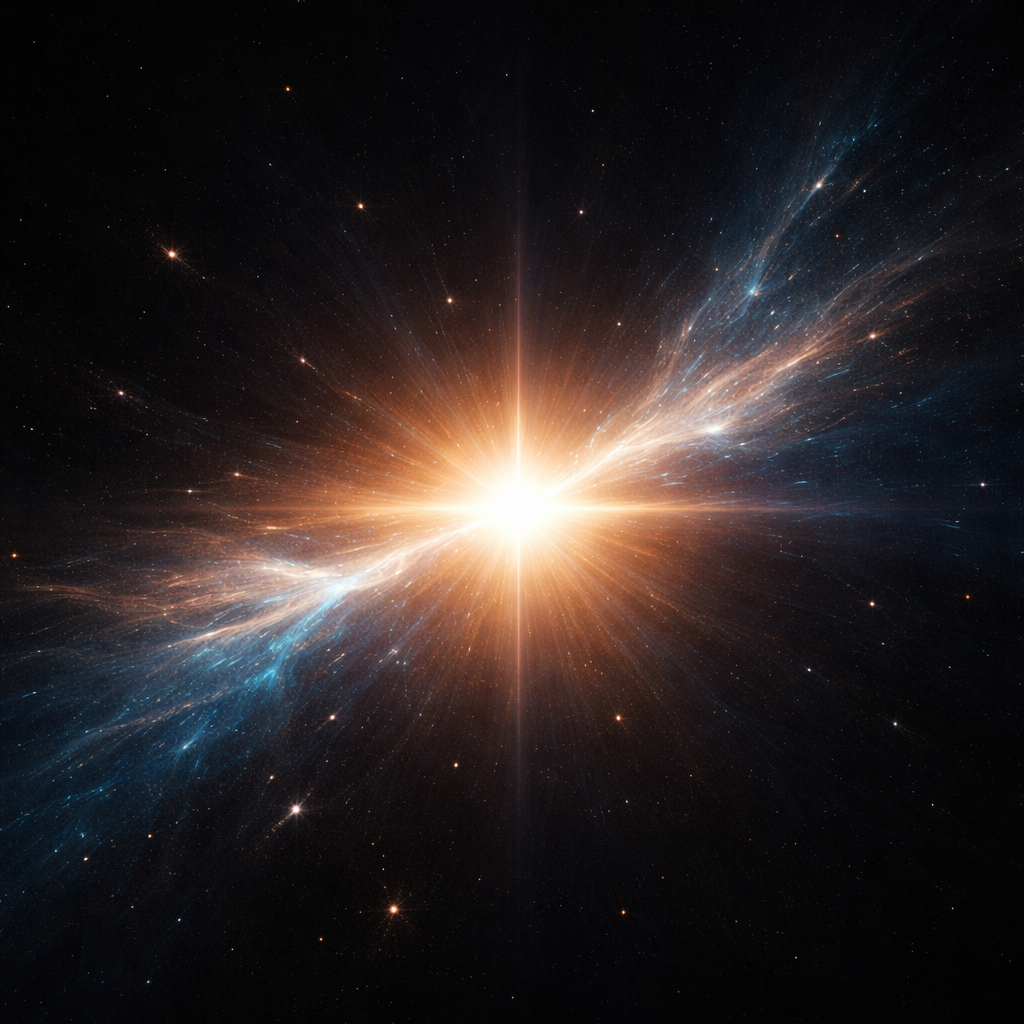

The Big Bang is often described as the moment everything began—space, time, matter, and energy all emerging from a single, infinitely dense point. But here’s the question that continues to puzzle even the greatest minds:
👉 What existed before the Big Bang?
Was there “nothing”?
Or was there something beyond our understanding—something deeper than space and time itself?
This question is not just scientific. It touches philosophy, consciousness, and even ancient wisdom traditions. And surprisingly, modern physics is now exploring ideas that sound strikingly similar to concepts described thousands of years ago.
Let’s dive into one of the greatest mysteries of existence.
The Big Bang — A Beginning, Not the Beginning?
According to modern cosmology, the universe began around 13.8 billion years ago with the Big Bang. Everything expanded from a state called a singularity—a point where the laws of physics as we know them break down.
But here’s the twist:
👉 The Big Bang describes how the universe expanded, not why it began.
Scientists openly admit that:
- Physics cannot fully explain what happened at time = 0
- The concept of “before” may not even apply in a normal sense
Because if time itself started at the Big Bang…
👉 then asking “before” might be like asking what’s north of the North Pole?
Theory 1: The Quantum Vacuum — “Nothing” That Is Actually Something
One of the most accepted scientific ideas suggests that the universe came from a quantum vacuum.
But don’t confuse this with empty space.
👉 In quantum physics, “nothing” is never truly nothing.
The quantum vacuum is:
- A field of fluctuating energy
- Filled with virtual particles appearing and disappearing
- A dynamic system capable of creating matter
Some physicists propose:
👉 The universe could have emerged from a random quantum fluctuation.
Meaning:
The entire cosmos might be the result of a tiny “spark” in a sea of invisible energy.
Theory 2: The Cyclic Universe — Endless Creation and Destruction
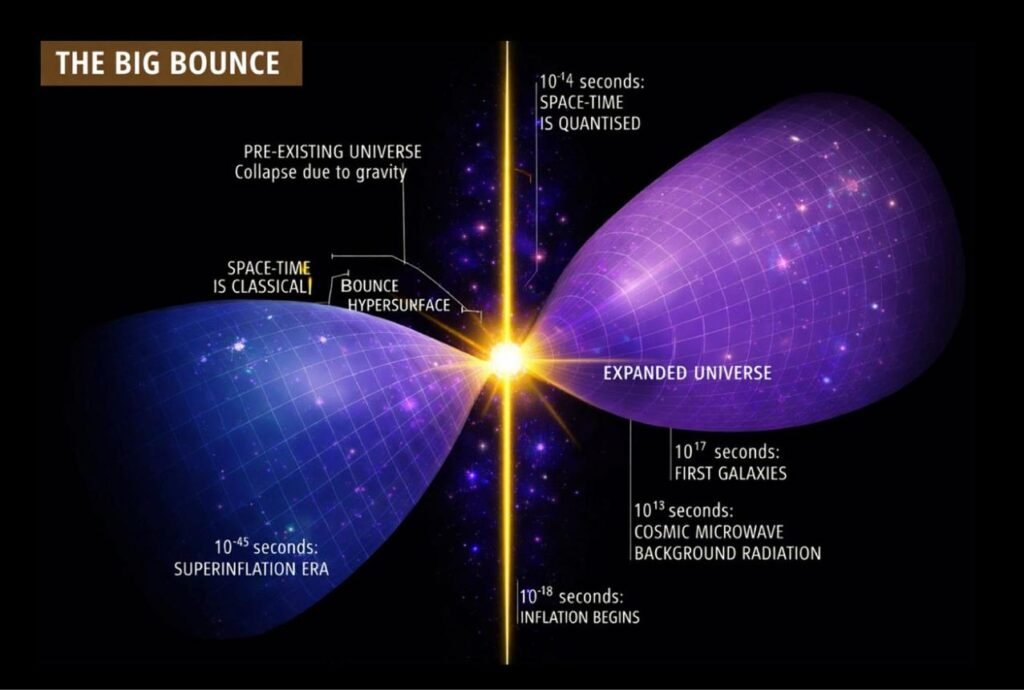
What if the Big Bang was not the first event… but just one in an infinite cycle?
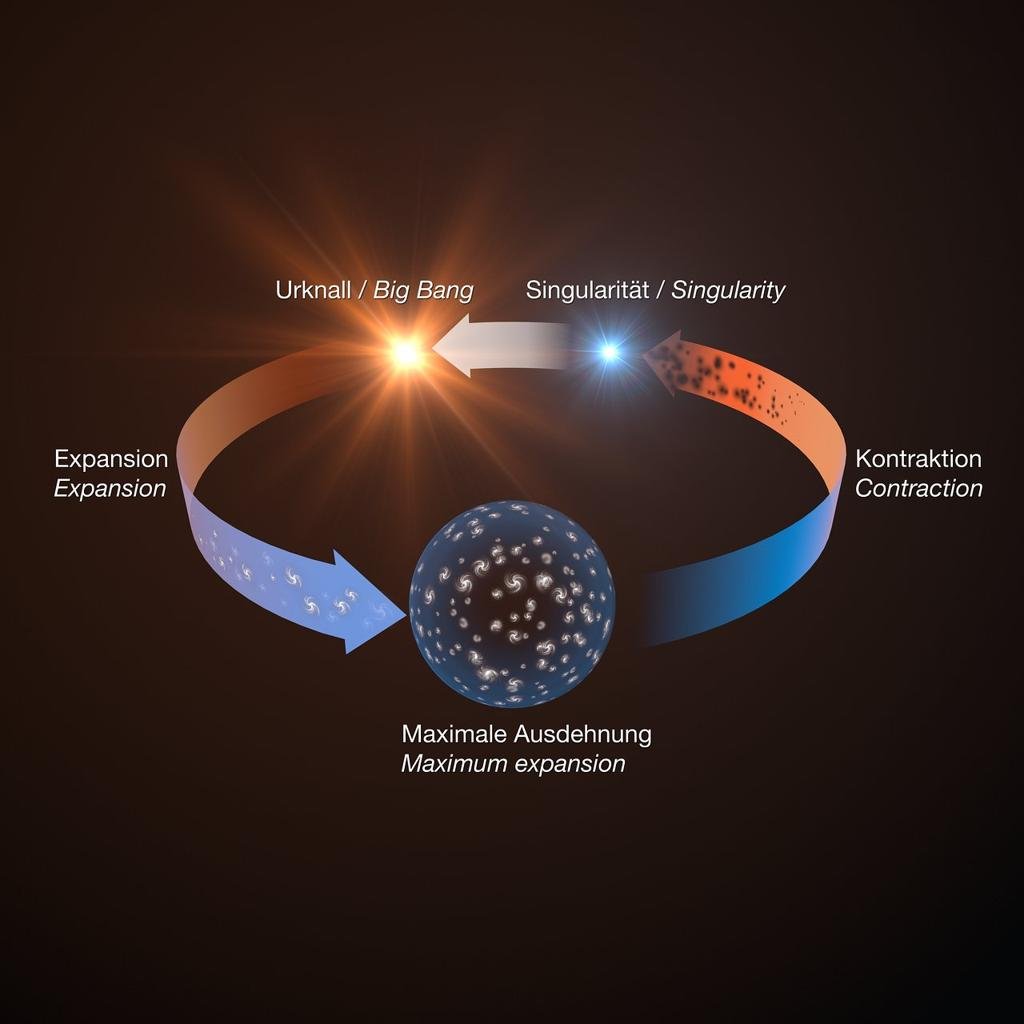
The cyclic universe theory suggests:
- The universe expands → slows down → collapses (Big Crunch)
- Then it “bounces” back into a new Big Bang
This cycle could repeat forever.
👉 Meaning:
There may have been countless universes before ours.
This idea strongly resonates with ancient Indian philosophy, where time is described as cyclical (Kalachakra)—a never-ending loop of creation and destruction.
Theory 3: The Multiverse — Our Universe Is Just One of Many
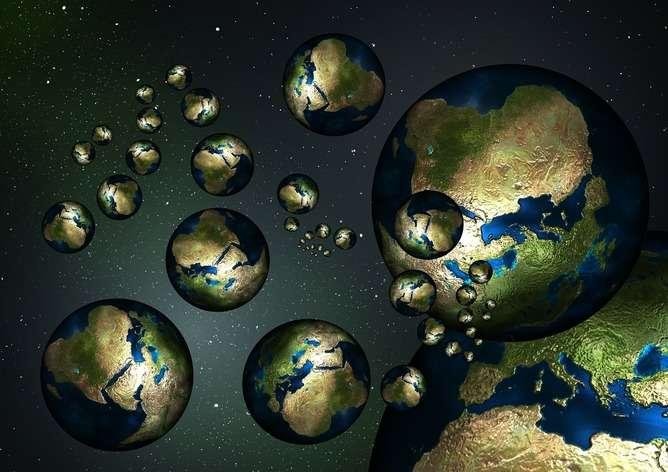
Another powerful idea is the multiverse theory.
It suggests:
👉 Our universe is just one “bubble” among infinitely many universes.
Each universe may have:
- Different physical laws
- Different constants
- Different realities
In this view:
👉 The Big Bang was not the beginning—just the beginning of our universe.
There could be:
- Universes where time flows differently
- Universes where gravity behaves differently
- Even universes where you exist in another form
Ancient Wisdom Meets Modern Science
Thousands of years ago, texts like the Vedas and Upanishads described the universe in ways that are surprisingly aligned with modern theories.
They spoke of:
- A state of absolute void (Shunya) before creation
- The emergence of the universe from cosmic consciousness (Brahman)
- Cycles of creation and destruction (Srishti & Pralaya)
👉 These ideas mirror:
- Quantum vacuum (energy-filled “nothing”)
- Cyclic universe models
- Consciousness-based interpretations of reality
While science uses equations, ancient wisdom used experience and observation of consciousness.
Both are now pointing toward the same truth:
Reality is far more complex than we once imagined.
A Deeper Possibility — Time Itself May Be an Illusion
Some modern physicists suggest something even more radical:
👉 Time might not be fundamental.
Instead:
- Time could be an emergent property
- A way our brain organizes reality
If this is true:
👉 Then the question “before the Big Bang” loses meaning completely.
Because:
- There may be no “before”
- Only different states of existence
This idea connects deeply with your other upcoming topic:
👉 Time Is Not Real? (we’ll build that next if you want)
If you’re curious about deeper mysteries of existence and how ancient knowledge connects with modern science, you can explore this detailed guide on the hidden wisdom of the Bhagavad Gita and its relevance in modern life where concepts of time, consciousness, and reality are explained from a completely different perspective.
Why This Question Matters
You might wonder—why does this even matter?
Because understanding the origin of the universe helps us understand:
- Our place in existence
- The nature of reality
- Whether we are случайность (accident) or part of something bigger
It transforms:
👉 “Where did we come from?”
into
👉 “What are we part of?”
The Role of Quantum Physics — Where Reality Breaks Down
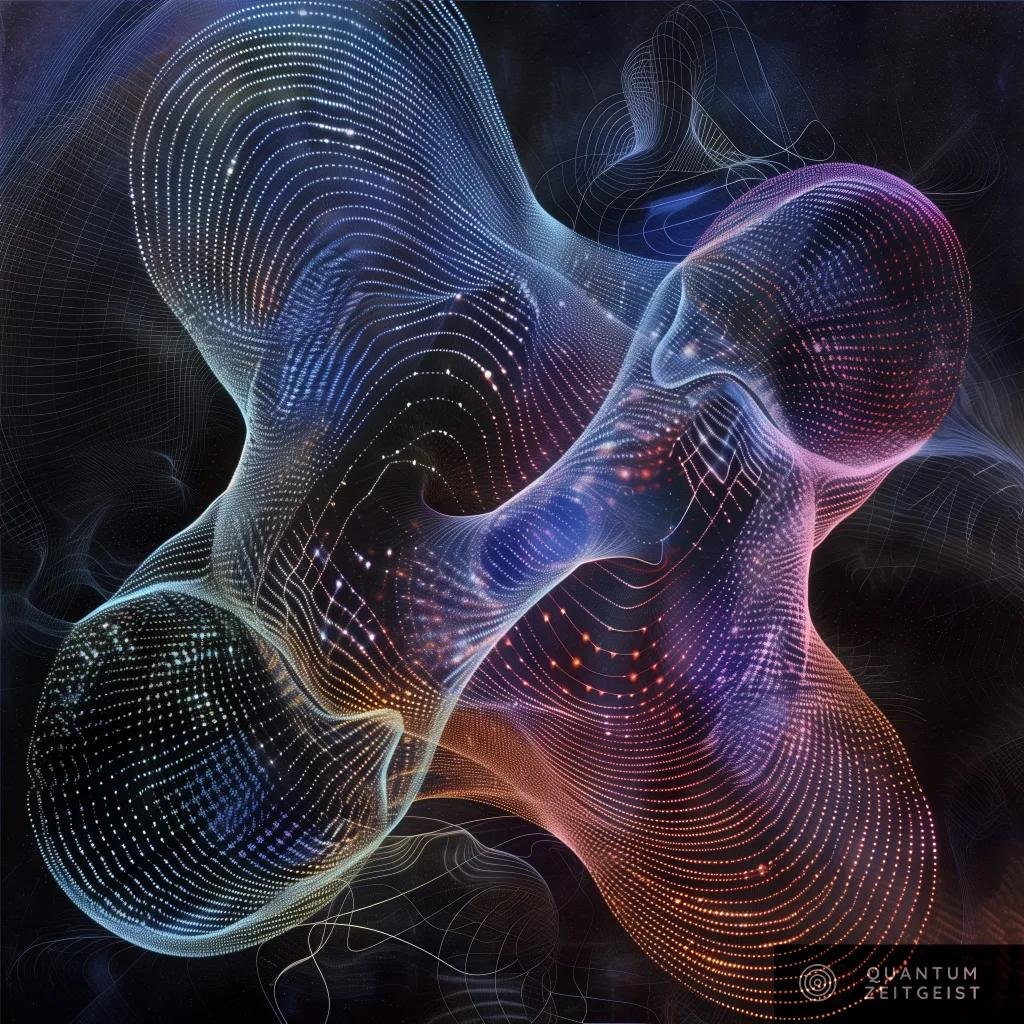
To truly understand what might have existed before the Big Bang, we must step into the strange world of quantum physics—a domain where reality behaves in ways that completely defy common sense.
At the quantum level:
- Particles can exist in multiple states at once (superposition)
- They can instantly affect each other across vast distances (entanglement)
- And most importantly…
👉 Reality itself appears probabilistic, not fixed
This leads to a fascinating possibility:
The universe may not have been “created” in the traditional sense—it may have emerged from a field of probabilities.
In simple terms:
- Before the Big Bang, there may not have been matter
- There may not even have been space
- But there could have been a quantum state of pure potential
This idea challenges everything we think we know about existence.
Can Consciousness Exist Before the Universe?
One of the most controversial—but deeply intriguing—ideas is this:
👉 What if consciousness existed before the universe itself?
Some scientists and philosophers suggest:
- Consciousness is not created by the brain
- Instead, the brain is a receiver of consciousness
This flips the entire narrative.
Instead of:
👉 Universe → Life → Consciousness
It becomes:
👉 Consciousness → Universe → Life
Interestingly, this aligns with ancient Indian philosophy, where Brahman (universal consciousness) is considered the ultimate reality from which everything emerges.
If this is true:
👉 The Big Bang may not be the beginning of existence
👉 It may simply be the beginning of physical reality
If you’re curious about what might exist beyond the limits of our visible universe, you can explore this detailed analysis on what lies beyond the observable universe and the unknown reality of space, where we dive deeper into regions of space that remain completely beyond human observation.
The Fine-Tuning Mystery — Why Does the Universe Exist at All?
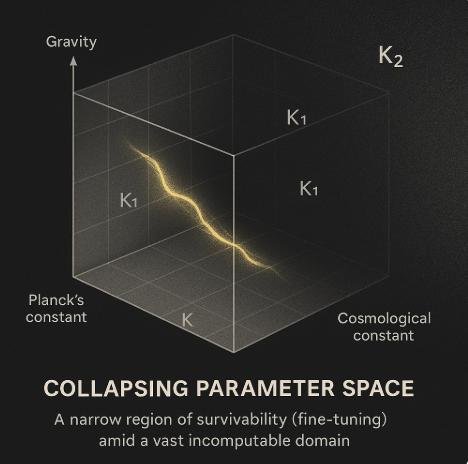
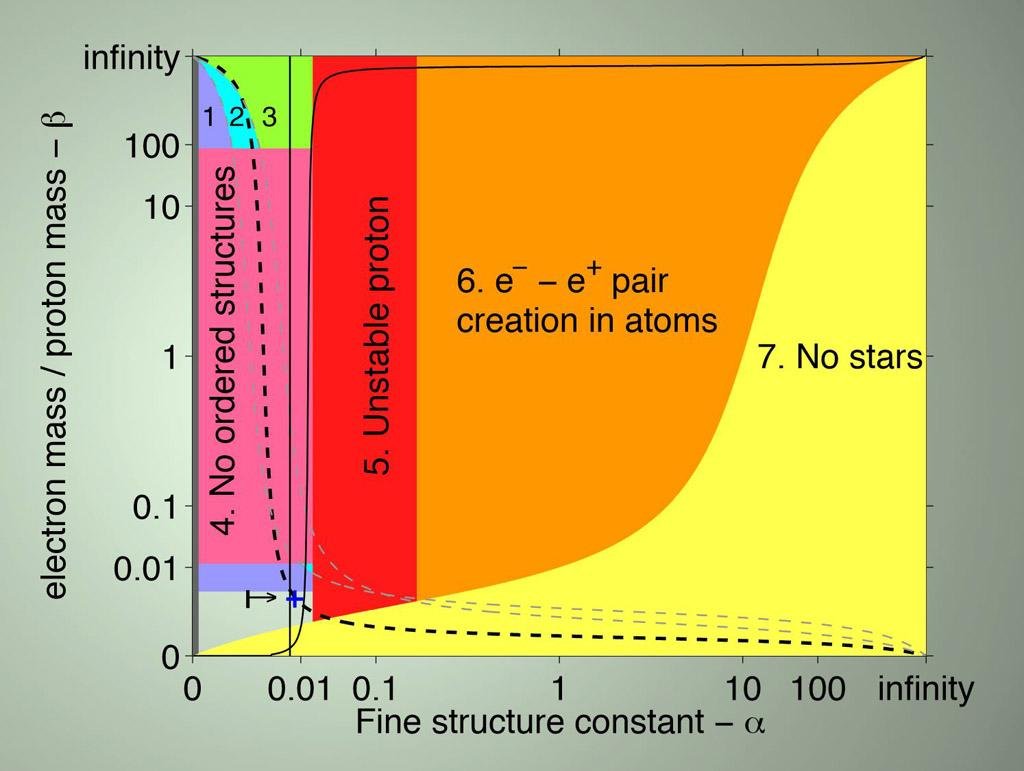
Another major puzzle that connects to “before the Big Bang” is the fine-tuning problem.
Scientists have discovered that:
- The fundamental constants of the universe are perfectly balanced
- Even a tiny change would make life impossible
For example:
- If gravity were slightly stronger → stars would collapse
- If it were weaker → galaxies would never form
👉 So the question becomes:
Why does the universe exist in such a precise and life-supporting way?
There are only a few possible explanations:
- Pure coincidence (extremely unlikely)
- Multiverse (we exist in one of many possible universes)
- Some deeper underlying principle or intelligence
This brings us back again to the idea that:
👉 The origin of the universe may not be random—it may be deeply structured.
According to NASA, current cosmological models suggest that the Big Bang explains the expansion of the universe but does not fully answer what caused its origin or what existed before it.
What Future Science Might Reveal
Right now, we are limited by our technology and understanding. But the future may change everything.
Upcoming advancements may help us:
- Understand quantum gravity (the missing link between relativity and quantum physics)
- Detect signals from before the Big Bang (if they exist)
- Simulate entire universes using advanced AI and supercomputers
Scientists are already working on theories like:
- String Theory
- Loop Quantum Gravity
- Holographic Universe Models
Each of these could bring us closer to answering:
👉 What truly came before everything?
A Thought That Changes Everything
Let’s pause for a moment and think deeply.
If:
- Time began with the Big Bang
- Space began with the Big Bang
- Matter began with the Big Bang
Then asking “what was before?” might be the wrong question.
👉 A better question could be:
What is the source from which space, time, and matter emerge?
And that question…
👉 is where science meets philosophy, and logic meets awareness.
Final Thoughts
The truth is:
👉 We don’t yet know what happened before the Big Bang.
But we are closer than ever.
Science is pushing boundaries.
Philosophy is asking deeper questions.
Ancient wisdom is offering new perspectives.
And somewhere between all of this… lies the answer.
Maybe the beginning of the universe is not just a scientific mystery—
but a doorway to understanding reality itself.
The mystery of what happened before the Big Bang is not just a scientific puzzle—it is a doorway into the deepest questions of existence.
Are we living in a universe that emerged randomly?
Or are we part of a reality that is far more profound than we can currently understand?
As science evolves, one thing is becoming clear:
👉 The universe is not just expanding in space…
👉 It is expanding in meaning.
And perhaps, the answer we are searching for is not just out there in the cosmos—
👉 but also within the limits of our own understanding.
Read More Interesting Content in My Blog Section.
FAQ Section
1. Did time exist before the Big Bang?
Most scientists believe time itself began with the Big Bang, so “before” may not exist in a traditional sense.
2. Can the Big Bang theory explain everything?
No. It explains the expansion of the universe, but not the ultimate origin or cause.
3. Is the multiverse theory proven?
Not yet. It is a theoretical concept supported by some mathematical models but lacks direct evidence.
4. What is the quantum vacuum?
It is a state of space filled with fluctuating energy, not truly empty.