
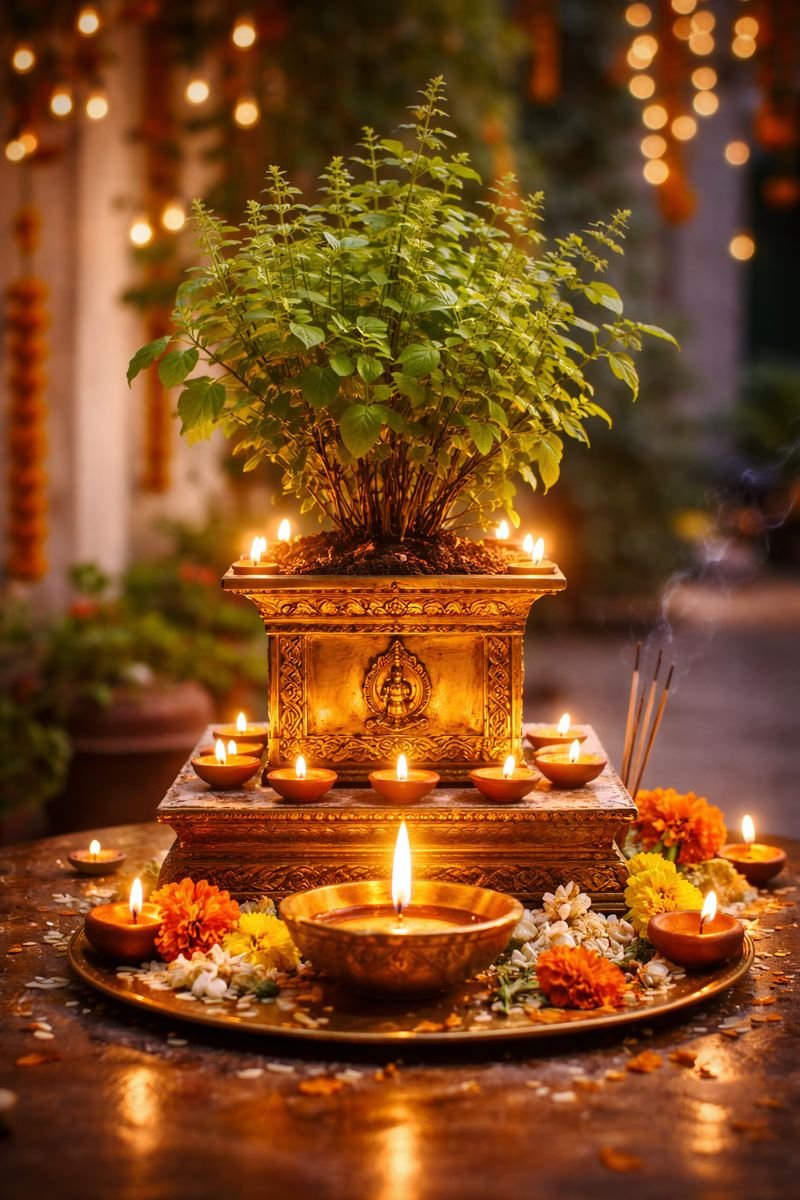

Tulsi plant benefits have been discussed in Indian tradition for thousands of years, especially in the Vedic concept of oṣadhi (sacred medicinal plants). From spiritual purification to immunity and stress management, Tulsi holds a unique position that modern science is now beginning to validate.
Tulsi beautifully bridges ancient Vedic wisdom and modern science. What the Vedas revered spiritually, science now validates medically. This makes Tulsi not just a sacred plant—but a complete natural health system.
Benefits of Tulsi According to the Vedas
In Vedic literature, Tulsi is not seen merely as a plant but as a living sacred presence.
🌿 Vedic & Spiritual Significance
Tulsi is described as “Vishnu-priya” (beloved of Lord Vishnu).
It is believed that Tulsi purifies the environment, home, and human consciousness.
Many Vedic rituals state that offerings without Tulsi are incomplete.
Keeping Tulsi at home is said to remove negative energies and promote sattva (purity).
🌿 Health & Life Energy (Prāṇa)
Vedic understanding links Tulsi with enhancing prāṇa (life force).
Daily consumption is said to:
Balance Vata, Pitta, and Kapha doshas
Strengthen immunity
Improve mental clarity and calmness
🌿 Longevity & Protection
Tulsi is often mentioned in ancient texts as a protector against diseases and untimely death.
Planting Tulsi near the house was advised to purify air and water naturally.
Benefits of Tulsi According to Science
Modern research strongly supports many traditional claims.
🔬 Scientifically Proven Benefits
Boosts Immunity
Contains eugenol, ursolic acid, and rosmarinic acid that strengthen immune response.Powerful Antioxidant
Fights free radicals and slows cellular aging.Stress & Anxiety Reduction
Acts as an adaptogen, helping the body handle stress and cortisol imbalance.Respiratory Health
Helps in asthma, bronchitis, cough, and cold by reducing inflammation.Blood Sugar Regulation
Studies show Tulsi helps lower blood glucose levels.Liver Protection
Protects liver cells from toxins and oxidative stress.Antibacterial & Antiviral
Effective against harmful bacteria and viruses.
🌟 Interesting Facts About Tulsi
🌱 Tulsi releases oxygen for up to 20 hours a day, unlike most plants.
🦟 Tulsi naturally repels mosquitoes and insects.
🧬 NASA-supported studies have highlighted Tulsi’s air-purifying properties.
🕉️ Tulsi is one of the few plants worshipped daily in human history.
☕ Tulsi tea is now recognized globally as a natural wellness drink.
🏡 Traditional homes placed Tulsi in the courtyard for health + Vastu benefits.
🌍 Tulsi is used today in modern medicines, immunity boosters, and herbal supplements worldwide.
“While the Vedas often speak broadly of medicinal plants (oṣadhi) rather than naming Tulsi specifically, Rigveda’s Oṣadhi Sūkta and Atharvaveda’s plant hymns establish the sacred and therapeutic status of herbs—an umbrella under which Tulsi is later honored as a supreme household medicine.”
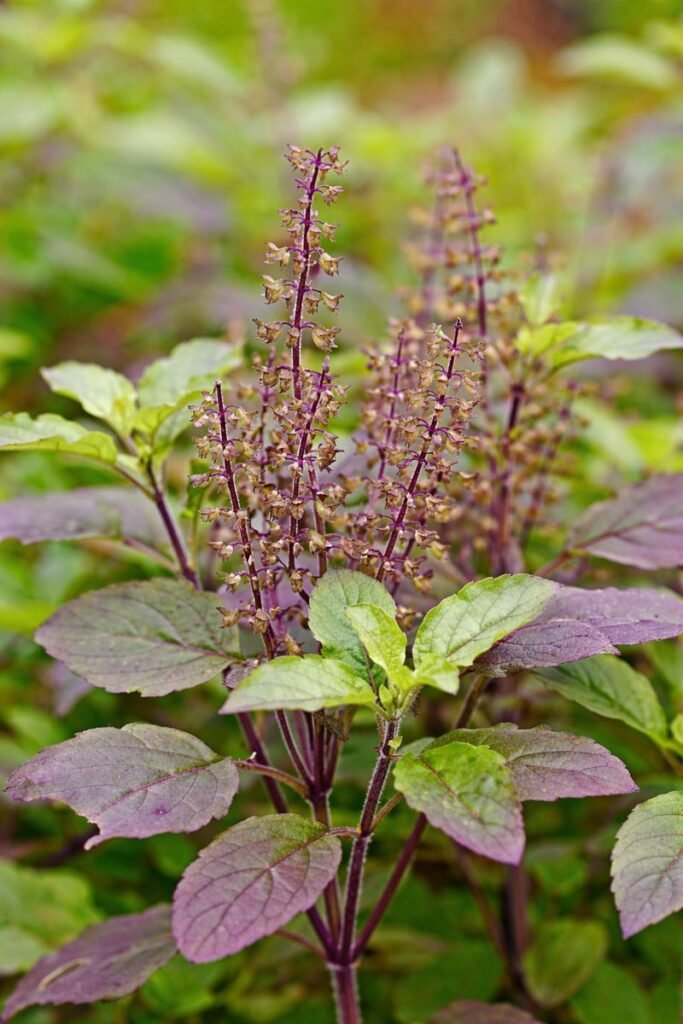
Tulsi (Holy Basil) — Ocimum tenuiflorum (also known as Ocimum sanctum) — is one of those rare plants that sits at the intersection of spiritual tradition, household wellness, and modern research. In Indian homes, Tulsi is often treated like a living family member: watered daily, protected, and respected. But beyond devotion, there’s a real story here—one that becomes even more interesting when we separate what the Vedas actually say, what Ayurveda and later tradition developed, and what modern science (and NASA) truly confirms.
1) Tulsi “According to Veda”
Vedic worldview behind Tulsi is crystal clear:
Rigveda 10.97 (Oṣadhi Sūkta) is a major hymn in praise of medicinal plants and their healing power—herbs are invoked as protectors that help remove disease and restore wellbeing.
In your blog, you can phrase it like: “In the Rigveda’s Oṣadhi Sūkta, herbs are honored almost like divine helpers—protecting humans and supporting recovery.”Atharvaveda 8.7 contains a strong invocation to medicinal plants asking for protection from illness—showing an early Vedic idea that nature provides a “pharmacy” for human life.
Atharvaveda 7.87 reflects the deeper spiritual ecology: sacred forces are spoken of as present in herbs/plants, emphasizing that plants aren’t “just” material—they carry a sacred vitality.
Tulsi becomes famous in later Indian tradition and Ayurveda as a “top-tier household herb,” and its cultural role fits perfectly inside the Vedic model of oṣadhi = sacred medicine. Your blog can confidently say:
“The Vedas elevate medicinal plants as sacred healers; Tulsi later becomes one of the most celebrated household oṣadhis within that same tradition of plant-based protection and vitality.”
2) Tulsi According to Science (What research supports)
Stress support / Adaptogenic action: Human-focused evidence reviews describe Tulsi as helping the body handle stress and related lifestyle strain.
Immune & anti-inflammatory potential: Many studies (in vitro/animal/human mix) report antimicrobial, anti-inflammatory, and immunomodulatory actions.
Metabolic signals (blood sugar & lifestyle markers): Reviews of human studies also discuss beneficial trends for metabolic health (still an area where more high-quality trials help).
Environmental stress protection: Tulsi has been studied for protective effects against various chemical/physical stressors in research literature.
NASA
NASA researched indoor plants for air quality improvement in sealed environments, and the idea became popular globally.
“NASA certified Tulsi” are often not directly supported by NASA’s core plant lists; Tulsi is better presented as a traditional Indian wellness plant with some evidence and a cultural air-freshening role, rather than a NASA-stamped air purifier.
Tulsi is often described as a “stress-buffering herb” with wide pharmacological actions, which is why it shows up in immunity, respiratory, and lifestyle wellness discussions.
Tulsi facts !
Tulsi is not just “basil.” It’s chemically and traditionally distinct from culinary basil; it’s globally known as “holy basil.”
Tulsi’s research reputation is so broad that one well-cited review describes it as useful across multiple stress types (physical, chemical, metabolic, psychological).
The Vedic idea behind Tulsi is bigger than Tulsi: in Rigveda 10.97, herbs are revered as powerful protectors—almost like a living healing system.
Tulsi’s aromatic compounds are one reason it’s used in tea and traditional preparations—and aroma quality can vary with handling and drying (great “quality tip” angle).
Tulsi is culturally unique: it’s one of the few plants that is actively integrated into daily household routine (watering, care, rituals), which itself can create a “wellness habit loop” (discipline + calm).
Read More: My Blog